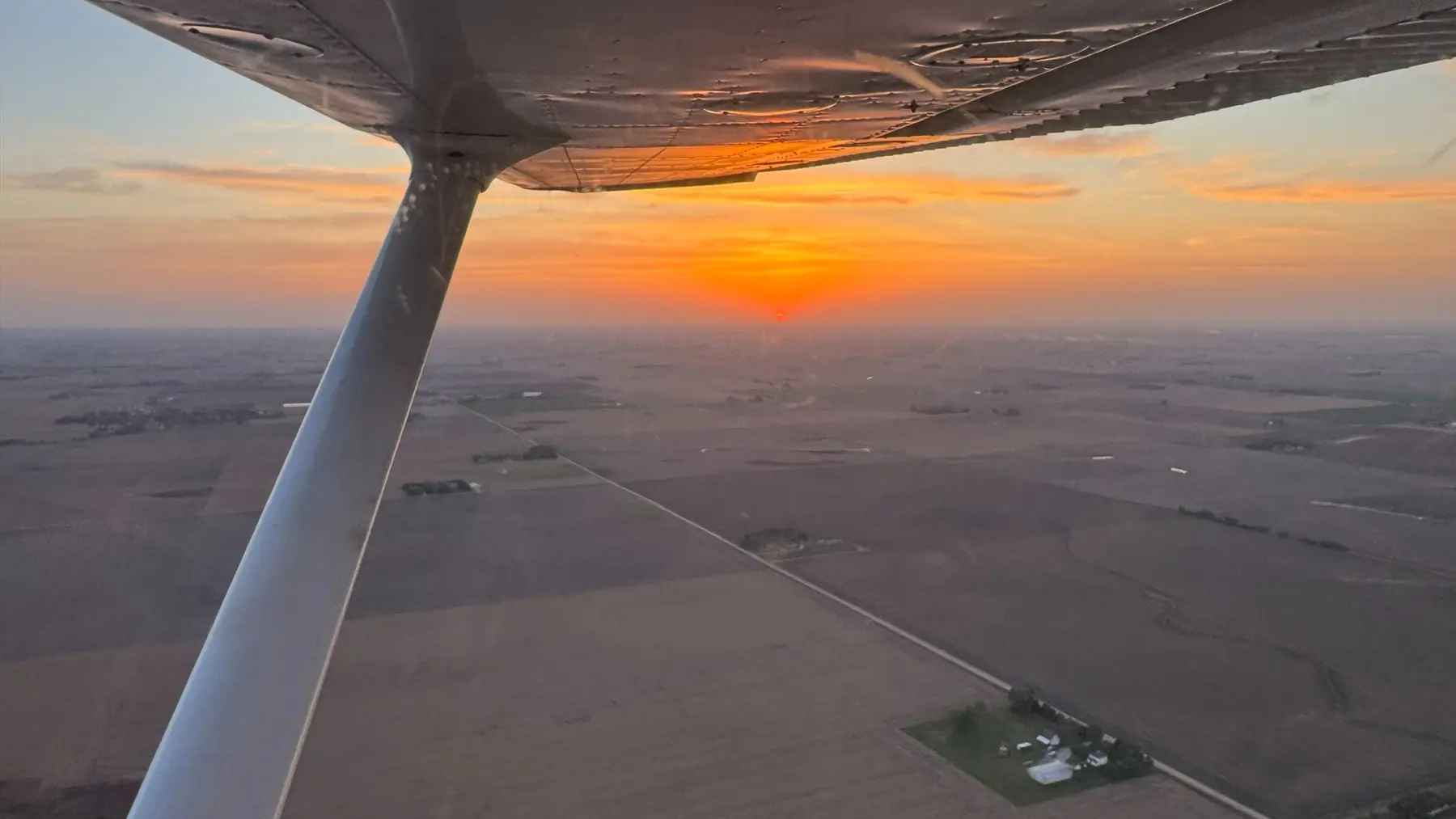
In-airplane instruction
Flight reviews, instrument proficiency, tailwheel flying, advanced aircraft handling, and focused work on the skills that have become rusty or uncertain.
Nebraska and by arrangementFlight instruction built on understanding
I offer local flight instruction in Nebraska and remote instruction for pilots anywhere. Lessons focus on useful physical models, sound judgment, and habits that hold up after the lesson ends.
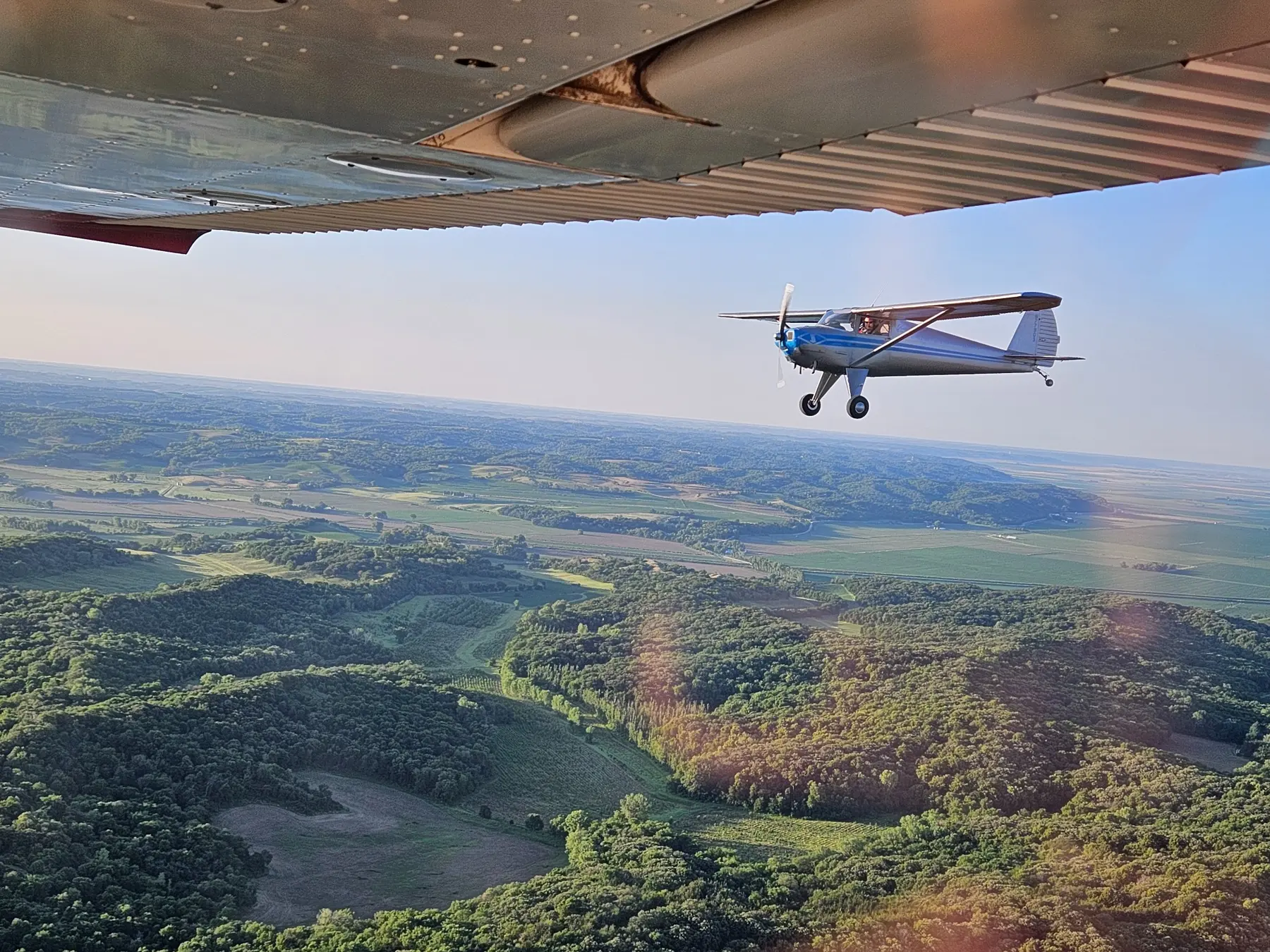
A correct performance is only the beginning.
Instruction
We will define what you need to accomplish before choosing the lesson.
Flight reviews, instrument proficiency, tailwheel flying, advanced aircraft handling, and focused work on the skills that have become rusty or uncertain.
Nebraska and by arrangementOne-on-one sessions for aerodynamics, aircraft systems, energy management, instructional technique, and specific questions that need a careful answer.
Video call · pilots and instructorsBuild clearer explanations, stronger lesson structure, and better ways to observe what a learner is actually doing before intervening.
CFI mentoring · practical teaching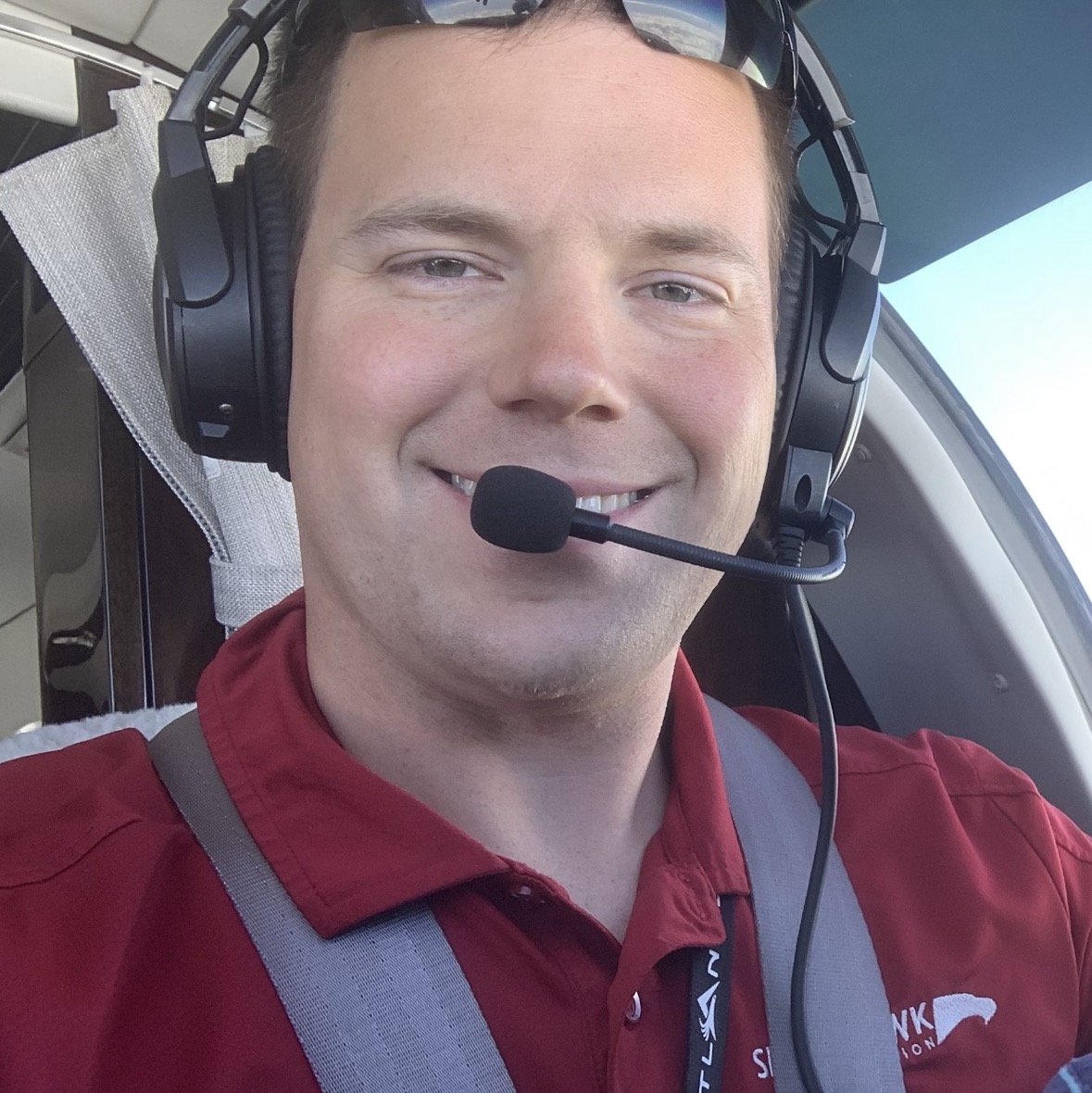

About David
I’m an aerospace engineer and ATP who has spent thousands of hours teaching in airplanes ranging from basic trainers and tailwheel aircraft to multiengine airplanes. I also fly professionally in turbine aircraft and work in Part 135 training and checking.
Those parts of my career shape my instruction: physics should be useful, procedures should support judgment, and a pilot should understand why an airplane behaves as it does instead of merely memorizing the approved phrase.
Tell me what you’re working on →Videos, articles, and tools
Flight instruction, aircraft handling, aerodynamics, systems, and practical teaching.
Choose a topic, change the controls, and explore what happens.
Airflow, aircraft handling, and the forces behind flight.

Change density, airspeed, angle of attack, and shape. Explore airflow, lift, and drag with a teaching model that keeps its assumptions in view.

Move the stick and throttle, or request forces, and watch pitch, airspeed, lift, drag, and the flight path respond together.

Move the elevator, change the power, and follow the forces to the flight path. Explore thrust, drag, and V-speeds in a connected teaching model.

Move the stick, rudder pedals, and throttle. Explore bank, turn rate, slips, and skids with a rear-quarter aircraft view and connected instruments.

Explore propeller disk loading, slipstream and roll, asymmetric thrust, rudder authority, and engine-out control in an illustrative twin-engine model.

Compare takeoff and landing at sea level and higher density altitude. Watch acceleration, climb, touchdown speed, kinetic energy, and stopping distance in a paired teaching model.

Move the pivot, change wing and tail geometry, then pull and release. Explore trim, oscillation, and stall with measured airfoil data and a labeled post-stall model.

Explore 256 NACA airfoils, change angle of attack, and watch illustrative separation and stall. Compare the teaching model with ideal potential flow, pressure, and lift.
Follow the systems that keep a piston airplane running.

Trace fuel, ignition, vacuum, and electrical power through a piston airplane. Change controls, introduce failures, and see which components keep working in a connected teaching model.

Explore a piston engine on a wind-tunnel test stand, or troubleshoot hidden faults using shared engine controls and instruments. Follow power, thrust, fuel pathways, oil indications, and cylinder temperatures.
Explore connected systems, fuel control, electrical power, and cabin pressurization.

Compare compressor rotor/stator diffusion with turbine nozzle/rotor expansion. Adjust stages and flow conditions, then follow pressure, temperature, velocity, and shaft work through the machine.

Explore PT6A-21 and PT6A-135A reference installations. Trace airflow and the independent shafts through a live cutaway, move the engine controls, and follow propeller governing and engine instruments.

See how the N1 and N2 shafts fit inside one another and rotate independently. Use the starter, add combustion, and lock the fan to follow mechanical drive and gas-path coupling.

Build electrical, hydraulic, pneumatic, and rotating-shaft networks. Route connections, measure pressure, flow, voltage, and current, and power gear, flaps, and speed brakes in a simplified teaching model.

Trace compressor-discharge air from the engine to the fuel-control diaphragm. Change throttle and density altitude, and follow the governor, bleed valve, and fuel-metering needle in a connected teaching model.

Explore a starter-generator and its control unit. Trace the start circuit, field regulation, bus power, and protective trips in a hands-on teaching model.

Choose a controller, set the bleed air, and fly a climb or descent. Watch cabin altitude, pressure differential, and the outflow valve respond in a hands-on teaching model.
Explore the C90A/B electrical system and C90A fuel system.

Trace battery, generator, and external power through the King Air C90A/B electrical architecture. Start the engines, operate bus ties, and introduce faults in a connected teaching model.

Trace wing and nacelle fuel, transfer pumps, boost pressure, and crossfeed. Use the cockpit panel and introduce failures to distinguish available pressure from actual fuel flow in a conceptual teaching model.
Three connected systems studies: CJ1 electrical and hydraulics, plus the CJ crossfeed fuel configuration.

Trace battery, starter-generators, external power, relays, and buses. Operate switches and inject faults while watching the circuit and cockpit meters respond.

Follow fuel, motive flow, and scavenging through the Citation CJ crossfeed system. Explore pumps, valves, filters, and faults. This models CJ crossfeed, not CJ1 fuel transfer.

Follow hydraulic supply, return, gear sequencing, flaps, and speed brakes. Explore locks, actuators, failures, and the separate emergency-extension path.
See how the atmosphere changes a flight.

Check when frost may form on an aircraft parked outside. Compare temperature, dew point, and cloud cover around your planned departure.

Explore GPS satellite geometry, VOR radials, NDB/ADF bearings, and four-course radio-range signals. Move the aircraft and compare what the instruments tell you.

Start with a bare planet, then add sunlight, air, rotation, oceans, and moisture. Follow computed winds and circulation through four atmospheric levels in a reduced teaching model.

Place air masses and circulation centers over a U.S. map. Follow fronts, wind, and simplified rain and thunderstorm ingredients in a hands-on conceptual model.

Compare true altitude with pressure and density altitude. Adjust temperature, pressure, and aircraft height, then trace matching air properties between your atmosphere and the standard atmosphere.

Release warm and cold air parcels and follow their temperature, buoyancy, and motion. Explore dry stability, moist convection to 60,000 feet, mixing, and Skew-T/log-P views.

Explore equal-time and return-fuel limits on a range diagram or Boston–London map, then compare out-and-back flights in the round-robin wind paradox.
Practice managing attention and competing demands.

Place two reference points on a map. Compare wind, spacing, energy and power, check the straight legs, and export a KML overlay.

Practice an attitude-centered scan, interpret the flight instruments, and cross-check their indications against a magnetic compass and supporting engine and system gauges.

Explore observation, interpretation, decisions, and feedback during a simplified instrument approach. Adjust the pilot’s loop and atmospheric turbulence, then compare the aircraft’s path with the live CDI.

Manage six tasks, review your score, and see your interaction pattern. Optional research sharing after each run.
Build structures and explore the models behind flight.
New: Autopilot PID Laboratory → Tune altitude hold, introduce gusts, and compare sluggish, balanced and hunting responses. Explore servo limits and integral windup.

Build a tapered I-section spar, adjust its web and flanges, add a strut and engine, and explore positive and negative loading, gust response and structural failure.

Build ideal flows with sources, sinks, doublets and vortices. Explore cylinder and airfoil presets, Kutta circulation, streamlines and pressure.
Quizzes
Review checkride standards and regulations, then revisit missed questions with source-linked explanations.
Explore standards quizzes →Writing
Aerodynamics, flight instruction, Luscombe travel, tailwheel flying, and professional aviation.
Explore the writing archive →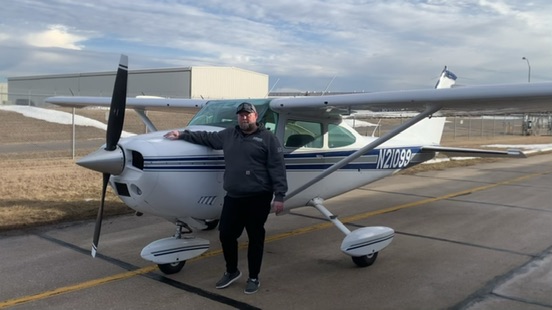
Student milestones
Twenty-five student achievements, with new milestones added as they happen.
Meet the pilots →Request instruction
Send a little context. I’ll reply personally to discuss whether I’m the right instructor and what a useful session could look like.